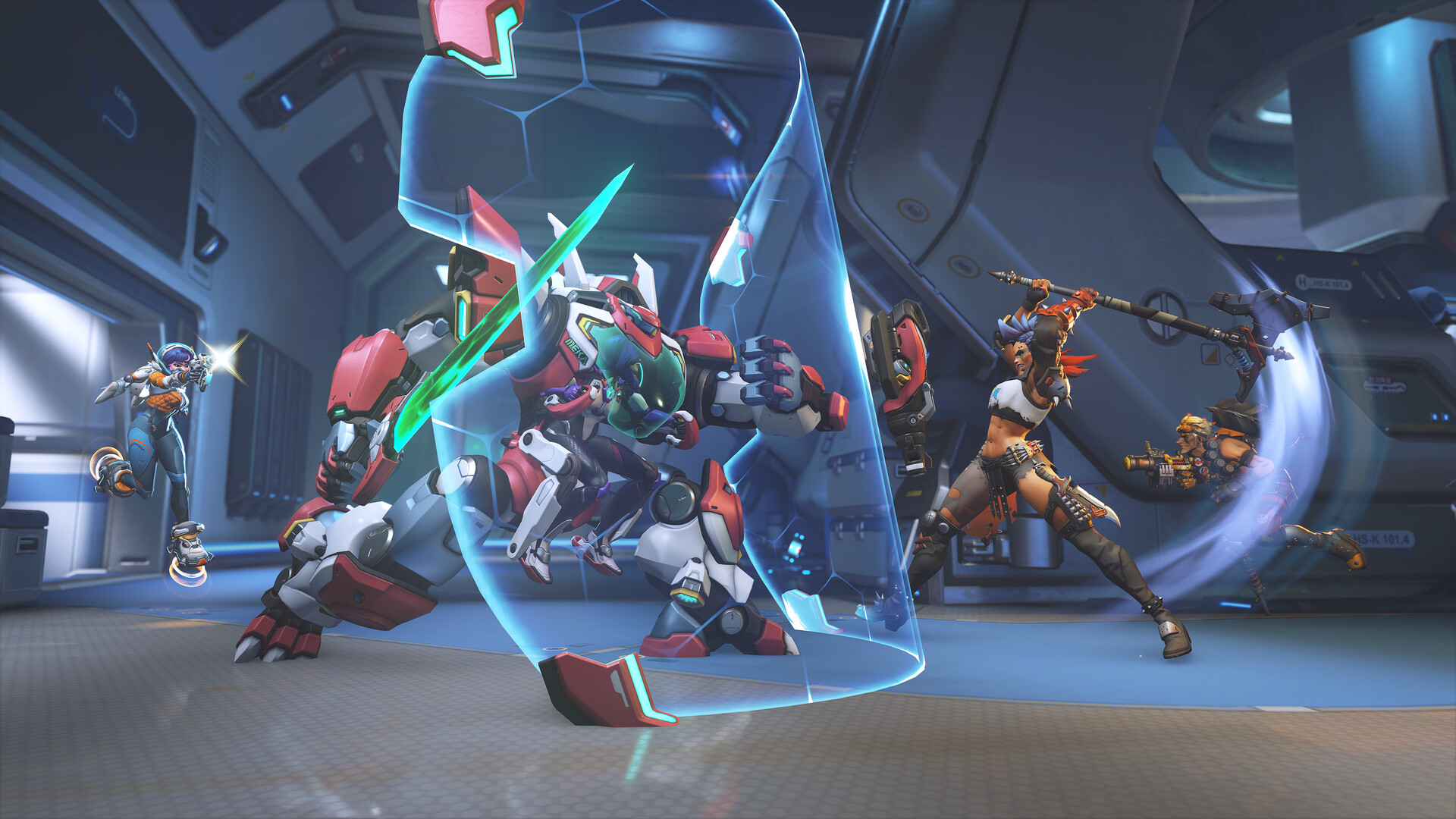
You open your match history after an exhausting four-hour session only to stare down a net loss of twenty-two skill rating points. You hit three consecutive team-wipe ultimates on King’s Row, held the choke with precision on tank, and watched both support players chase an enemy Tracer into an alleyway before dying instantly. Competitive ladder play in lower brackets rarely reflects personal mechanical execution; it reflects an endless cycle of matchmaking variance, throwers, and team coordination breakdowns. Deciding to buy an Overwatch Boost cuts straight through that mathematical sinkhole by separating your personal skill ceiling from the volatility of uncooperative teammates. The modern matchmaking rating system relies heavily on baseline performance metrics that assume five coordinated players, yet solo queue routinely presents you with disconnected players, uncommunicative duos, and tilted DPS players refusing to swap counters. When your daily free time is limited to two or three games after work, spending forty hours simply recovering from bad teammate variance is an irrational investment of your life. Shifting past these artificial barriers restores the game back to a strategic competition where solid play actually yields predictable, earned victories.
The Mathematics of Wasted Hours on the Competitive Ladder
Consider the cold arithmetic behind climbing out of Platinum or Diamond through sheer volume alone. If an above-average player sustains an impressive sixty percent win rate over an entire split, they net roughly five to ten skill tier divisions across a grueling span of eighty to one hundred individual matches. That requires thirty to forty pure hours of high-stress focus, assuming zero network disconnects, no server instabilities, and no throwers sabotaging the streak.
Most adults with careers or serious commitments cannot afford that raw time expenditure. When you get trapped in a low MMR bracket, the system requires dozens of matches to recalibrate its confidence rating in your profile, effectively anchoring your account in place despite tangible individual improvement. You spend weeks grinding basic mechanics that your current lobby cannot even capitalize on because your tank refuses to push through the choke or your damage dealers neglect basic high-ground control. Escaping this loop through sheer brute force does not prove grit; it simply exposes how punishing the ladder is to players who respect their own free hours outside the monitor screen.
Why Low Elo Mechanics Actively Ruin Your Skill Growth
Playing hundreds of rounds inside chaotic brackets actively degrades your game sense by teaching you habits that only work against disorganized opponents. In lower tiers, positioning mistakes go unpunished, flankers overextend without consequence, and support cooldowns get wasted on full-health allies without enemy exploitation. If you adjust your style to carry those disordered matches—such as playing hyper-aggressive tank lines or front-lining as an off-healer—you build muscle memory that gets completely shredded once you step into Masters lobbies. This dynamic explains why investing in an Overwatch Boost frequently yields better long-term mechanical growth than grinding hundreds of disorganized matches on your own. When you enter higher-tier lobbies alongside players who understand tempo, crossfires, and cooldown tracking, your decisions begin to produce logical results. You learn proper staging, understand dry pushes, and absorb actual competitive pacing instead of scrambling to fix the structural errors of random internet strangers. Progressing your rank gives you direct access to the actual game Overwatch was built to be, rather than the chaotic brawl found in bottom-tier brackets.
| Progression Metric | Solo Queue Grind | Five-Stack Grouping | Dedicated Account Service |
| Typical Time to Climb 500 SR | 40 to 70 Hours | 25 to 40 Hours | 6 to 12 Hours |
| Exposure to Match Sabotage | High (60%+ of Matches) | Moderate (Smurfs / Stacks) | Zero (Controlled Execution) |
| Teammate Tactical Synergy | Random and Inconsistent | Dependent on Friend Group | Elite Top-Tier Mechanics |
| Primary Gameplay Focus | Babysitting Low-Rank Errors | Coordinating Casual Schedules | Pure Role Mastery and Execution |
Evaluating How an Overwatch Boosting Protects Your Free Time and Account Value
Looking at ranked climbing through an economic lens reveals why many veterans view an Overwatch Boost as a practical solution rather than a shortcut. If your working hour is worth twenty, thirty, or fifty dollars, spending forty hours of your week sweating through disorganized placement matches to climb three divisions represents thousands of dollars in lost opportunity.
On top of that, the ladder has become flooded with throwers on alternate accounts, account traders, and high-ranked players testing new heroes without any real stake in the outcome. Expecting an honest, balanced match in mid-tier ranks ignores the reality of modern free-to-play matchmaking architecture. Professional booster services neutralize that structural imbalance by deploying players who maintain top five hundred fundamentals, turning chaotic team compositions into organized tactical sweeps. Rather than draining your mental energy dealing with rage-quitters during your weekend downtime, you preserve your enthusiasm for the title. You skip the artificial matchmaking barrier and immediately begin queuing in tiers where communication exists, voice channels provide actionable callouts, and every participant actually tries to push the payload across the finish line.
Holding Your Ground in Higher Tiers After the Climb
The most common myth pushed by forum purists claims that anyone using an Overwatch Boost will immediately slide straight back into the ranks they escaped. In practice, match data and personal experiences frequently show the exact opposite for players who already possess foundational game sense. Maintaining a rank within Grandmaster or high Diamond requires a completely different skill set than carrying four disorganized strangers through a Gold lobby. In high-tier play, you do not need to generate three solo elimination picks per engagement just to push an objective. Instead, your task is to fulfill your designated role: holding an off-angle, denying an enemy dive, managing defensive ultimates, and maintaining line of sight with your primary tank. When your teammates hit their shots and position properly, doing your job becomes dramatically simpler and far less chaotic. Players often discover that their natural playstyle was always suited for structured team play rather than the wild, uncoordinated shootouts of lower brackets. You finally get to experience the game as intended, supported by players who capitalize on your utility rather than letting your resources go to waste.
Video games exist to deliver competition, excitement, and relaxation, not unpaid shifts of psychological frustration. If your nightly competitive sessions leave you exhausted, irritated, and questioning why you spent three hours watching your rank stagnate, continuing the same routine makes little sense. Taking control of your competitive placement bypasses the structural flaws of automated matchmaking algorithms that prioritize artificial engagement over player satisfaction. You deserve to compete in environments that challenge your intellect, sharpen your game sense, and reward your communication. Stepping into lobbies where teammates value map control, trade eliminations effectively, and sync cooldowns reinvigorates your passion for every hero in the roster. Stop sacrificing your evenings to matchmaking lotteries and coin-flip team rosters that pull your rank down through no fault of your own. By selecting a smart path forward, you skip the digital purgatory, reclaim your spare hours, and finally play Overwatch with the caliber of teammates you should have had all along.